Chicken Nesting Box Guide: Size, Number, Setup, and Bedding
Everything you need to know about chicken nesting boxes: how many to provide, the right size and height, the best bedding, and how to get hens to lay where you want.
Nesting boxes are where all your chicken-keeping effort finally pays off, in the form of clean, easy-to-collect eggs. Get them right and your hens will lay reliably in one convenient spot. Get them wrong and you will be hunting for eggs in hidden corners, dealing with broken or dirty eggs, or fighting hens that insist on sleeping where they should be laying. This guide covers everything that matters: how many boxes to provide, the right size and placement, the best bedding, and how to coax reluctant hens into using them.
Nesting Box Options

VEVOR Metal Chicken Nesting Boxes, 4 Compartments
Durable metal nesting boxes with perches and a design that helps keep eggs clean.
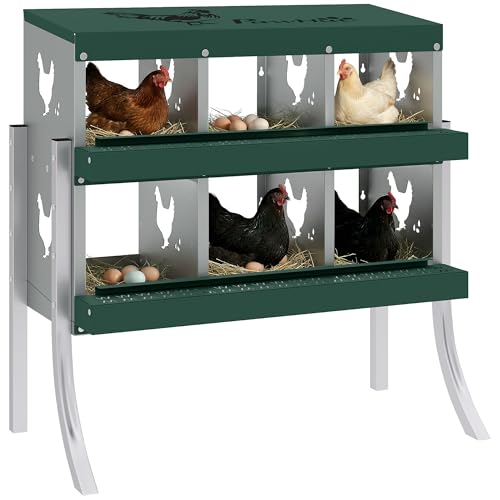
PawHut 6 Compartment Metal Nesting Boxes
A six-box unit for larger flocks, sized for standard hens to lay comfortably.

Touri Chicken Nesting Boxes, 3 Pack
A simple, affordable set of nesting boxes for hens and ducks in a small flock.
How Many Boxes Do You Need?
Fewer than you might think. The standard rule is about one nesting box per three to four hens. This works because hens are not territorial about boxes the way you would expect. In fact, they tend to share favorites, and you will often see several hens queue for the same popular box while others sit empty. Providing one box per three to four birds gives enough capacity to avoid crowding without wasting coop space. Too few boxes, on the other hand, leads to hens crowding into one box, breaking eggs, and developing egg-eating habits.
Getting the Size Right
A nesting box should feel like a cozy, private nook. For standard breeds, aim for roughly 12 inches in each dimension, wide and deep and tall enough for a hen to settle in and turn around, but snug enough to feel secure. Larger breeds appreciate a little more room, while bantams do fine with smaller boxes. The space should feel enclosed and den-like, not like an open shelf. A box that is too large invites multiple hens to pile in together, which leads to broken eggs.
Placement and Height
Where you put the boxes matters as much as how many you provide. Two principles guide good placement. First, keep boxes lower than the roosting bars. Chickens instinctively seek the highest spot to sleep, so if the boxes are higher than the roosts, hens will sleep in them and foul the bedding and eggs. Mounting boxes lower, commonly around 18 to 24 inches off the floor but always below roost height, solves this. Second, put boxes in the dimmest, most private part of the coop, since hens prefer to lay where they feel hidden and safe. A small lip at the front of each box keeps eggs and bedding from rolling out.
Backyard Chicken Keepers Planner
Track your chicken's health, meds, vet visits, mobility, nutrition, and quality of life, all in one printable planner.
The Best Bedding for Nesting Boxes
The right bedding cushions eggs, keeps them clean, and helps deter mites. Good options include pine shavings, straw, and commercial nesting pads, all of which provide a soft, supportive layer. Keep the bedding fresh and dry, removing soiled material regularly, since dirty nest boxes mean dirty eggs and invite parasites. Avoid cedar shavings, which release aromatic oils that can irritate chickens' respiratory systems. A generous handful of clean bedding in each box, refreshed often, keeps eggs in good shape and your hens happy to lay there.
Getting Hens to Use the Boxes
Sometimes hens stubbornly lay everywhere except the boxes. If that happens, work through the likely causes. Make sure you have enough boxes and that they are private, dim, and lower than the roosts. Keep them clean and inviting. A classic trick is to place a fake egg or a golf ball in each box, which signals to hens that this is a safe place to lay. If hens favor a hidden corner of the run or coop, block off that spot to redirect them. Most hens take to well-designed boxes quickly, especially once one bird starts the trend and the others follow.
Solving Common Nesting Box Problems
A few issues come up often, and each has a straightforward fix:
- Hens sleeping in boxes: Raise the roosts above box height, and block box access at night for a while to break the habit.
- Dirty eggs: Refresh bedding more often, keep boxes lower than roosts, and consider roll-away boxes.
- Broken or eaten eggs: Add boxes to reduce crowding, collect eggs frequently, and use roll-away designs that move eggs out of reach.
- Mites in boxes: Clean regularly, avoid cedar, and inspect bedding and birds for parasites.
Consider Roll-Away Boxes for Clean Eggs
If you struggle with dirty, broken, or pecked eggs, a roll-away nesting box is worth considering. Its gently sloped floor guides each freshly laid egg out of the hen's reach into a collection tray, keeping eggs clean, cutting breakage, and helping stop egg eating before it starts. They cost more than basic boxes, but for keepers battling persistent egg problems, they can be a tidy, lasting solution. Whatever style you choose, the fundamentals stay the same: enough boxes, the right size and height, clean bedding, and a private, inviting spot for your hens to do what they do best.
Pet Insurance · Sponsored
Have a Dog or Cat at Home Too? Protect Them From Surprise Vet Bills
Most backyard chicken keepers share their home with a dog or cat as well, and one emergency visit can run into the hundreds or thousands. Pet insurance can help cover surprise vet bills so a sudden cost does not force a hard choice. Get a free quote and see what coverage fits your household.
Frequently Asked Questions
How many nesting boxes do I need?
Plan for about one nesting box per three to four hens. Hens tend to share favorite boxes and even queue for a preferred one, so you do not need a box per bird. Too few boxes leads to crowding, broken eggs, and egg eating, while a few well-placed, clean boxes encourage hens to lay reliably where you want them to.
What size should a nesting box be?
For standard breeds, roughly 12 inches wide, 12 inches deep, and 12 inches tall is a good target, snug enough to feel secure but big enough for a hen to turn around. Larger breeds appreciate a bit more room, and bantams can use smaller boxes. The box should feel like a private, enclosed nook rather than an open shelf.
How high should nesting boxes be off the ground?
Place nesting boxes lower than the roosting bars, often around 18 to 24 inches off the floor, but always below roost height. Hens do not need them high, and keeping boxes lower than the roosts discourages birds from sleeping and pooping in them. A small lip at the front keeps eggs and bedding from rolling out.
What should I put in nesting boxes?
Use soft, clean bedding that cushions eggs and stays in place, such as pine shavings, straw, or commercial nesting pads. Keep it fresh and dry, removing soiled material regularly. Clean bedding cushions eggs to prevent breakage, keeps eggs clean, and discourages mites. Avoid cedar shavings, which give off oils that can irritate chickens.
Why are my hens not using the nesting boxes?
Common causes include boxes that are too bright, too exposed, too high, or too few, as well as hens preferring a hidden spot elsewhere. Make boxes private and dim, keep them clean and lower than the roosts, and place a fake or golf-ball egg inside to show hens where to lay. Blocking off appealing floor corners can also help redirect them.
How do I stop hens from sleeping in nesting boxes?
Hens sleeping in boxes soil the bedding and eggs. The main fix is making sure roosts are higher than the boxes, since chickens instinctively seek the highest spot to sleep. You can also block box access at night for a while to break the habit. Keeping boxes lower and roosts higher solves this in most flocks.
What is a roll-away nesting box?
A roll-away nesting box has a gently sloped floor that guides each freshly laid egg out of the hen's reach into a collection tray. This keeps eggs clean, reduces breakage, and helps prevent egg eating, since the hens cannot get to the eggs. They cost more than basic boxes but are popular with keepers battling dirty or pecked eggs.
Need more help with your flock?
Browse our guides by topic to find practical solutions.
Wellness Planner: $39