The Best Chicken First Aid Kit Essentials (2026 Guide)
Build a backyard chicken first aid kit that handles wounds, bumblefoot, and weak birds. Our research-based picks for wound care, soaks, and supportive supplies.
Ask any seasoned chicken keeper about their worst flock emergency, and you will almost always hear the same theme: it happened fast, and it happened at the worst possible time. A predator strike at dusk, an egg-bound hen on a Sunday, a sudden bumblefoot flare the night before a holiday. In those moments, the keepers who do well are the ones who already have the basics on hand. A well-stocked chicken first aid kit will not replace a vet, but it lets you stabilize a bird, stop a bleed, and buy precious time while you reach professional help.
This guide breaks down what belongs in a backyard chicken first aid kit and recommends specific, flock-appropriate products for each job. Our picks are based on research into common poultry emergencies, product specifications, ingredient safety for birds, and verified keeper reviews, not on hands-on lab testing. Think of it as a checklist to assemble before you ever need it.
Chicken First Aid Kit Picks
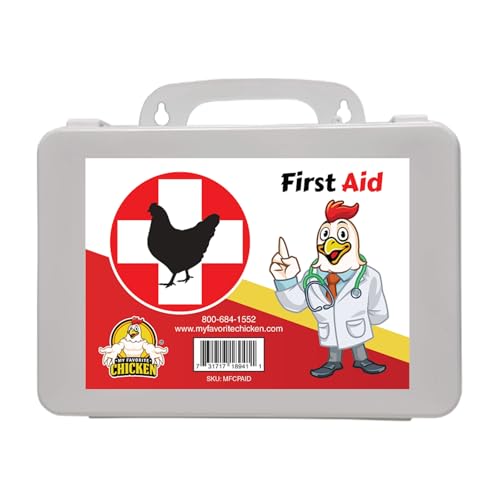
My Favorite Chicken Essential Poultry First Aid Kit
A pre-assembled flock kit that gathers core wound-care and care supplies in one box.

Vetericyn Vetericyn Plus Poultry Care Spray
No-sting antimicrobial spray for wounds, pecking injuries, bumblefoot, and eyes.

Dr. Naylor Dr. Naylor Blu-Kote Antiseptic Spray
Fast-drying antiseptic that masks red wounds to discourage further pecking.

AZEN AZEN Self-Adhesive Vet Wrap
Cohesive bandage wrap that sticks to itself for dressing feet and leg injuries.

Amazon Basics Amazon Basics Epsom Salt Soak
Magnesium sulfate for warm soaks that ease bumblefoot and egg-bound hens.

Sav-A-Chick Sav-A-Chick Electrolyte & Vitamin Supplement
Single-dose packets to rehydrate and support stressed, weak, or recovering birds.
How we chose these products
We focused on the situations backyard keepers actually face: wounds and pecking injuries, bumblefoot, egg binding, parasite damage, and the weak, off-feed bird that needs support. For each, we looked for products that are labeled or widely used for poultry, that carry strong verified-owner feedback, and whose ingredients are appropriate and safe for birds. We deliberately avoided anything containing pain-relief ingredients in the caine family or ointments not safe for poultry. The result is a practical core kit you can build on, rather than an exhaustive pharmacy.
Comparing the essentials
| Product | Best for | Why it earns a spot |
|---|---|---|
| Essential Poultry First Aid Kit | A ready-made starting point | Gathers flock-appropriate basics in one box |
| Vetericyn Plus Poultry Care Spray | Wounds, eyes, bumblefoot | No-sting antimicrobial made for poultry |
| Dr. Naylor Blu-Kote | Discouraging pecking | Antiseptic that disguises red wounds |
| AZEN Vet Wrap | Bandaging feet and legs | Sticks to itself, easy to apply |
| Epsom Salt Soak | Soaks for feet and egg binding | Relaxes muscles, softens scabs |
| Sav-A-Chick Electrolytes | Weak, dehydrated birds | Convenient single-dose support packets |
Wound care: the most-used category
Wounds are the emergency you will face most often, whether from a predator, a sharp object in the run, or pecking within the flock. A good antimicrobial wound spray like Vetericyn Plus Poultry Care is the workhorse here. It cleans and supports healing on cuts, pecking injuries, bumblefoot, and even vent issues, and because it does not sting, you can apply it without fighting the bird.
Pair it with an antiseptic that masks color, such as Dr. Naylor Blu-Kote. Chickens are relentlessly drawn to peck at red, exposed flesh, and a single wound can turn into a flock-wide pile-on. The blue-purple coating disguises the wound while disinfecting it, which both protects the injured bird and dries quickly. Round out the category with self-adhesive vet wrap and gauze for dressing wounds and wrapping feet, plus blunt scissors and tweezers for trimming and removing debris.
Soaks and supportive care
Epsom salt is one of the most versatile items in the kit. Warm Epsom salt soaks soften bumblefoot scabs, reduce swelling, and help relax the muscles of an egg-bound hen so she can pass a stuck egg. It is inexpensive, keeps indefinitely, and earns its place many times over.
For the weak, stressed, or off-feed bird, electrolytes and vitamins like Sav-A-Chick are essential. Dehydration and energy crashes accompany almost every illness and injury, and getting fluids and nutrients into a struggling bird often makes the difference. Many keepers also keep a nutrient drench on hand for birds that have stopped eating, since it delivers fast-absorbing energy while you address the underlying problem. Together, these supportive items help a recovering bird hold on while it heals.
Backyard Chicken Keepers Planner
Track your chicken's health, meds, vet visits, mobility, nutrition, and quality of life, all in one printable planner.
Building and storing your kit
Beyond the products above, round out your kit with practical extras: disposable gloves, clean towels for restraining birds, saline for flushing wounds and eyes, a syringe (without a needle) for administering fluids, and a designated clean container or dog crate for isolating a sick or injured bird away from the flock. Keep a written list of symptoms and your vet's contact information taped inside the lid, so anyone in the household can act in a pinch.
Store everything in a waterproof, clearly labeled container somewhere easy to grab but protected from heat, freezing, and dust, which means the house or a garage shelf is usually better than the coop itself. Check the kit a couple of times a year to restock anything you have used and replace expired items. A kit you assembled once and forgot does you little good if half of it has dried out or expired by the time you reach for it.
The most important item of all
No kit, however complete, replaces a diagnosis. The single most valuable thing you can prepare is a relationship with a poultry-savvy or avian vet, established before you need one, along with the contact details for your local agricultural extension office. Many areas have few vets who treat chickens, so finding yours ahead of time spares you a frantic search mid-emergency. Your kit lets you stabilize and support; your vet tells you what is actually wrong and how to fix it.
A chicken first aid kit is one of those purchases you hope to barely use, and that is exactly the point. Spend a little time and money assembling the basics now, store them where you can reach them fast, and keep your vet's number close. When an emergency comes, and in chicken keeping it eventually does, you will be glad you were ready instead of scrambling in the dark.
Pet Insurance · Sponsored
Have a Dog or Cat at Home Too? Protect Them From Surprise Vet Bills
Most backyard chicken keepers share their home with a dog or cat as well, and one emergency visit can run into the hundreds or thousands. Pet insurance can help cover surprise vet bills so a sudden cost does not force a hard choice. Get a free quote and see what coverage fits your household.
Frequently Asked Questions
What should be in a chicken first aid kit?
A solid kit covers wound care, parasite treatment, and supportive care. Core items include an antimicrobial wound spray, an antiseptic that masks red wounds to discourage pecking, self-adhesive vet wrap and gauze, Epsom salt for soaks, electrolytes and a nutrient drench for weak birds, vetericyn or similar for eyes and wounds, blunt scissors, tweezers, gloves, and a clean container for isolating a sick bird.
Do I really need a first aid kit for chickens?
Yes, and the reason is timing. Chicken emergencies, a predator wound, an egg-bound hen, a sudden bumblefoot flare, almost always happen at the worst moment, often at dusk when stores are closed. Having the basics on hand lets you act immediately instead of scrambling. A prepared keeper can stabilize a bird and buy time until a vet is reachable, which often determines the outcome.
Can I use human first aid supplies on chickens?
Some human supplies work well, such as saline, gauze, vet wrap, blunt scissors, and tweezers. However, avoid products containing ingredients ending in caine (like benzocaine) for pain relief and skip ointments not labeled safe for poultry, since some are toxic to birds. When in doubt, choose poultry-labeled products and confirm anything questionable with a vet before applying it.
Is a pre-made chicken first aid kit worth it?
A pre-made poultry kit is a convenient starting point, since it gathers flock-appropriate basics in one place so you are not guessing. Many keepers buy a kit and then add their own staples like extra electrolytes, a nutrient drench, and Epsom salt. The main value is having essentials assembled and ready before an emergency, rather than realizing mid-crisis that you are missing something.
How do I treat a bleeding chicken wound?
Stay calm, restrain the bird gently, and apply firm pressure with clean gauze to stop the bleeding. Once bleeding stops, clean the wound with saline or a poultry wound spray, then apply an antiseptic. Because chickens are drawn to peck red wounds, a blue antiseptic coating helps disguise it. Isolate the injured bird so flockmates do not peck the area, and see a vet for deep or large wounds.
Where should I store my chicken first aid kit?
Keep it in a waterproof, clearly labeled container somewhere easy to reach near the coop, but protected from heat, freezing, and moisture that can degrade supplies. Many keepers store it in the house or a garage shelf rather than in the coop itself, where temperature swings and dust take a toll. Check it a couple of times a year to restock used items and replace anything expired.
What is the most important item in a chicken first aid kit?
If you had to pick a few, an antimicrobial wound spray, electrolytes, and a way to safely isolate a bird cover the most common emergencies. Wounds and weakness are the situations you will face most, and isolation protects a hurt or sick bird from being pecked. That said, the truly essential item is having a vet's number ready, since no kit replaces professional diagnosis.
Need more help with your flock?
Browse our guides by topic to find practical solutions.
Wellness Planner: $39