Best Chicken Nesting Boxes 2026: Cleaner Eggs
Compare 6 of the best chicken nesting boxes for 2026, from metal multi-box units to roll-out designs and nest pads, with sizing tips and how to get cleaner eggs.
Good nesting boxes give your hens a private, comfortable place to lay and give you cleaner, less-cracked eggs with less hunting around the coop. Get them right and your flock lays reliably in one tidy spot. Get them wrong, with boxes too few, too bright, or too high, and you end up with floor-laid eggs, breakage, and hens sleeping where they should be laying. The good news is that the formula is simple, and there are solid options from budget plastic to roll-away metal.
We compared popular nesting boxes using manufacturer specifications, materials, box size and count, cleaning design, and the recurring themes in verified owner reviews. We did not test these in our own coop. Instead we weighed the features that matter most for a laying flock: the right size and number of boxes, easy cleaning, durability, and designs that keep eggs clean and intact. Below are six options we recommend, a comparison table, and guidance for choosing and placing them.
Best Chicken Nesting Boxes 2026

VEVOR Metal Nesting Boxes, 4 Compartments
Galvanized 4-box unit with a protective collection lip, easy to clean and rust-resistant.
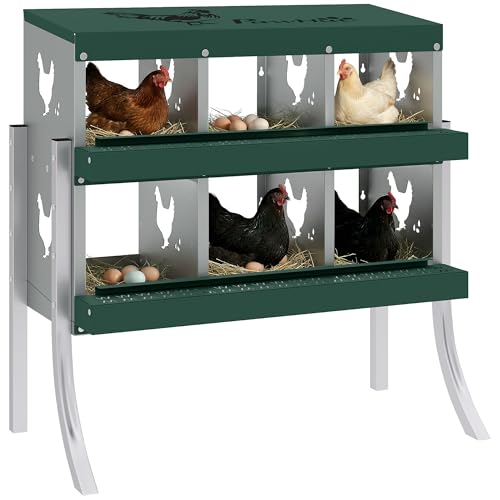
PawHut Two-Tier Metal Boxes, 6 Compartments
Six-box, two-tier metal unit that maximizes laying space in a compact coop footprint.

Touri Plastic Nesting Boxes, 3 Pack
Affordable durable plastic boxes for hens and ducks, easy to mount and rinse clean.
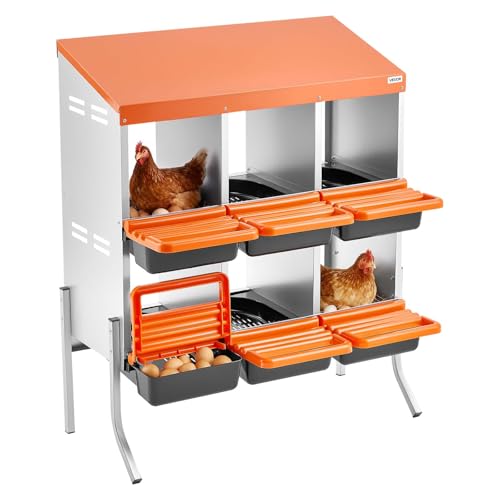
VEVOR Metal Boxes with Support Legs
Galvanized 6-compartment unit with support legs and easy egg collection for larger flocks.

Garvee 10-Hole Roll-Out Nesting Box
Rustproof galvanized roll-out box that rolls eggs to a covered tray for cleaner, safer eggs.

Pecking Order Nest Box Pads, 13x13 Inch
Sustainable USA-made nest pads that cushion eggs and swap out quickly for tidy boxes.
How Do These Nesting Boxes Compare?
| Product | Budget | Boxes | Material | Best For |
|---|---|---|---|---|
| VEVOR 4-box | Under $100 | 4 | Galvanized metal | Best overall, easy clean |
| PawHut two-tier | Under $100 | 6 | Metal | Compact footprint |
| Touri 3-pack | Under $25 | 3 | Plastic | Budget pick |
| VEVOR 6-box legs | Under $250 | 6 | Galvanized metal | Larger flocks |
| Garvee roll-out | Under $250 | 10 holes | Galvanized metal | Egg eaters, breakage |
| Pecking Order pads | Under $25 | Bedding | Nest pads | Clean, tidy bedding |
How We Picked These Nesting Boxes
We did not run a hands-on laying trial. Instead we compared manufacturer specifications, materials, box dimensions and counts, cleaning design, and the consistent patterns in verified owner reviews, then judged them against what gives hens a comfortable place to lay and keepers cleaner eggs. We weighted four factors most heavily. First, appropriate size and number of boxes for a backyard flock. Second, easy cleaning, favoring metal and removable trays that resist mites. Third, designs that protect eggs from breakage and fouling. Fourth, durability and secure mounting. Price and ease of installation rounded out the picture.
A Closer Look at Each Option
VEVOR 4-Compartment Metal Nesting Boxes
Our top overall pick covers a typical backyard flock with four boxes in a galvanized unit that wipes clean and resists rust and mites far better than wood. A protective collection lip keeps eggs and bedding from rolling out, and the metal build holds up for years. Four boxes suit roughly twelve to sixteen hens at the one-per-four rule, which is plenty for most coops. Mount it low, in a dim corner below the roosts, add soft bedding or a pad, and your flock has a clean, durable place to lay.
Pros: Easy-clean galvanized metal, mite-resistant, collection lip, durable.
Cons: Bare metal needs bedding for comfort; heavier than plastic.
PawHut Two-Tier 6-Compartment Boxes
For coops short on wall space, this two-tier metal unit packs six boxes into a compact footprint by stacking them, giving plenty of laying spots without spreading along the wall. The metal construction cleans easily and resists pests. Stacked boxes work well as long as hens can reach both tiers comfortably and the lower row stays below roost height. It is a smart pick for larger flocks in smaller coops where horizontal space is at a premium but you still want ample boxes.
Pros: Six boxes in a small footprint, easy-clean metal, space-saving.
Cons: Upper tier must remain below roosts; check hens use both rows.
Touri Plastic Nesting Boxes, 3 Pack
The budget pick here gives you three durable plastic boxes that rinse clean in seconds and mount easily on a coop wall. Plastic does not harbor mites the way wood can and shrugs off moisture, making upkeep simple. Three boxes suit a small flock of up to a dozen hens. They work for ducks too. For new keepers outfitting a first coop or anyone wanting cheap, low-maintenance boxes, these cover the basics well without a big spend.
Pros: Very affordable, easy to rinse, mite-resistant plastic, simple mounting.
Cons: Lighter build; may need secure fastening to stay put.
VEVOR 6-Compartment Boxes with Support Legs
This larger galvanized unit adds two more boxes and freestanding support legs, so you can place it without mounting to a wall, handy in walk-in coops and runs. Six boxes serve a sizable flock, and the easy egg collection keeps gathering quick. The legs make positioning flexible and keep the boxes off damp ground. It is a strong choice for keepers with bigger flocks or open coop layouts who want plenty of clean, durable laying space that stands on its own.
Pros: Six boxes, freestanding legs, easy collection, durable galvanized build.
Cons: Larger and pricier; needs floor space for the legs.
Garvee 10-Hole Roll-Out Nesting Box
If you battle cracked or eaten eggs, this galvanized steel roll-out box with rust-proof plastic trays is the targeted fix. Its slightly inclined floor sends each egg into a collection tray the moment it is laid, away from the hen, which protects eggs and keeps them noticeably cleaner. The ten holes suit a productive flock. Roll-out boxes need correct setup so eggs roll freely and gently, but for egg-eating or breakage problems they earn their keep. A great pick for serious layers and larger flocks.
Pros: Protects eggs from eating and breakage, cleaner eggs, high capacity, removable trays.
Cons: Costs more; needs careful setup so eggs roll correctly.
Pecking Order Nest Box Pads, 13x13
Not a box but the bedding that makes one work, these sustainable USA-made nest pads cushion eggs and drop into a standard 13-inch box for a tidy, quick-swap liner. Pads keep eggs cleaner than loose, scattered bedding and pull out in seconds at cleaning time, taking droppings and debris with them. Many keepers top a pad with a little straw for a natural feel. They are an inexpensive, low-effort way to keep any nesting box clean and your eggs spotless.
Pros: Quick to swap, keeps eggs clean, sustainable, fits standard boxes.
Cons: A consumable you replace over time; not a box on its own.
Setting Up Nesting Boxes for Success
- Provide one box per 3 to 4 hens. Hens share, so a few boxes cover a typical flock.
- Place them low and dark. A dim, quiet corner below roost height encourages reliable box use.
- Keep roosts higher. Roosts above the boxes stop hens from sleeping and pooping in the nests.
- Use clean, soft bedding. Straw, shavings, or nest pads cushion eggs and keep them clean.
- Collect eggs often. Frequent gathering means cleaner, intact eggs and discourages egg eating.
Good boxes encourage tidy laying, but watch your flock for problems like floor laying, egg eating, or hens crowding one box. These often signal too few boxes, too much light, or a need to gather eggs more often. For a sudden drop in laying, soft-shelled eggs, or signs of illness, consult a poultry veterinarian or local extension office. This guide is educational and complements that everyday care.
Related Chicken-Keeping Guides
Reviewed in detail
For coops with the nest boxes built in, see our best chicken coops roundup.
Frequently Asked Questions
How many nesting boxes do I need for my chickens?
A good rule is one nesting box for every three to four hens. Hens share boxes and often line up for the same favorite one, so you do not need a box per bird. Too few boxes can lead to crowding, egg breakage, and hens laying on the floor, while too many just take up space and may become roosting or storage spots. For a typical backyard flock of six to eight hens, two or three boxes are plenty. Place them in the darkest, lowest part of the coop.
What size should a chicken nesting box be?
For standard breeds, a box roughly 12 by 12 by 12 inches works well, giving a hen room to turn around and settle without being so large that two birds pile in. Larger breeds like Brahmas or Orpingtons appreciate a slightly bigger box, around 14 inches, while bantams do fine with smaller ones. The box should feel snug and secure, since hens like an enclosed, private space to lay. A small lip at the front keeps bedding and eggs from rolling out when the hen comes and goes.
How do I stop chickens from sleeping in the nesting boxes?
Chickens prefer to roost as high as possible, so make sure your roosts sit higher than the nesting boxes, which encourages birds to sleep on the roost instead. Block the boxes in the evening for a few nights to break the habit, then reopen them in the morning. Birds that sleep in boxes foul them with droppings, which dirties eggs and spreads mites. Keeping roosts the highest perch in the coop solves the problem for most flocks within a few days.
Should I use roll-out nesting boxes?
Roll-away or roll-out boxes have a gently sloped floor that lets the egg roll into a protected collection tray as soon as it is laid, away from the hen. This protects eggs from being cracked, dirtied, or eaten and keeps them cleaner overall. They cost more and need correct setup so eggs roll freely without harming the hen, but for flocks with egg-eating or breakage problems they are a real fix. For most beginners, a standard box with clean bedding is simpler and works well.
What bedding should I put in nesting boxes?
Soft, clean nesting material cushions eggs and keeps them clean. Common choices include straw, pine shavings, dried grass, or purpose-made nest pads, all of which let hens form a comfortable hollow. Avoid anything dusty or moldy, and keep a few inches in each box. Refresh it regularly, since soiled bedding leads to dirty or cracked eggs and can harbor mites. Nest pads are tidy and quick to swap, while loose bedding feels more natural to hens; many keepers use a pad with a little loose material on top.
Where should I put nesting boxes in the coop?
Place nesting boxes in the darkest, quietest, lowest part of the coop, below the level of the roosts. Hens instinctively seek a dim, secluded spot to lay, so a shadowy corner away from foot traffic encourages reliable box use and discourages floor laying. Keeping the boxes lower than the roosts also helps stop birds from sleeping in them. External boxes that hang off the coop wall, with an outside lid for collection, save interior floor space and let you gather eggs without disturbing the flock.
Need more help with your flock?
Browse our guides by topic to find practical solutions.
Keeper's Planner: $39