Best Chicken Roosting Bars 2026 for a Happy Flock
Compare 6 of the best chicken roosting bars for 2026, from multi-level wooden perches to metal frames and chick perches, with spacing, height, and material guidance.
A roosting bar is where your chickens spend every night, so getting it right matters for their comfort, rest, and health. Chickens are hardwired to sleep off the ground, and a proper perch keeps them off damp bedding, away from droppings and parasites, and out of the nesting boxes where they would otherwise foul your eggs. The right bar has the correct width, enough length for the flock, and sits higher than the boxes. Get it right and birds settle happily at dusk every evening.
We compared popular chicken roosting bars using materials, perch width and length, capacity, build quality, and the recurring themes in verified owner reviews, alongside guidance on natural roosting behavior. We did not install these in our own coop. Instead we weighed the features that matter most: a comfortable perch shape and width, enough space for the flock, sturdy construction, and the right height relative to nesting boxes. Below are six options we recommend, a comparison table, and guidance for setting up roosts your flock will use.
Best Chicken Roosting Bars 2026
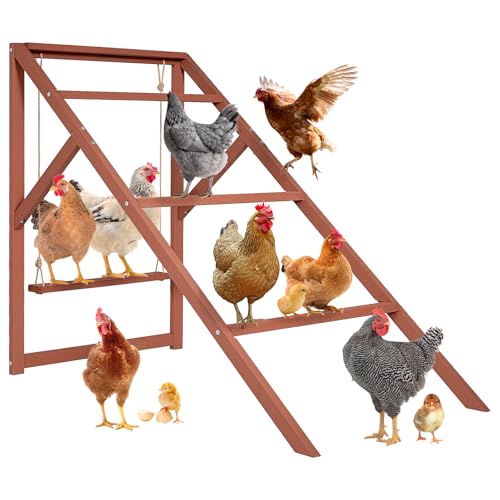
Petsfit PETSFIT Multi-Level Wooden Roosting Bars
Fir-wood multi-level perch with four bars and swings for 8 to 10 chickens, easy to assemble.

Petsfit PETSFIT Square Chicken Roosting Perch
Sturdy square wooden perch, 55 by 40 inches, easy to assemble and clean for backyard coops.

Luplom Luplom Chicken Perch with Ladder and Swing
Metal-pipe frame with wooden roosting bars, a ladder, and a swing, sized for 8 to 10 birds.

CADUKE CADUKE Chicken Perch Swing with Ladder
Metal perch and swing set with ladder for 8 to 10 chickens to roost and play.

niffgaff niffgaff Pine Roosting Perch
Budget large pine roosting bar with a mirror for outdoor use and easy installation.

Hipykat Hipykat Wooden Chick Roost Ramp
Folding natural-wood ramp and perch that teaches chicks to roost in the brooder.
How Do These Roosting Bars Compare?
| Product | Budget | Material | Capacity | Best For |
|---|---|---|---|---|
| PETSFIT multi-level | Under $100 | Fir wood | 8-10 birds | Best overall |
| PETSFIT square perch | Under $50 | Wood | Small flock | Simple, sturdy |
| Luplom perch with swing | Under $50 | Metal + wood | 8-10 birds | Roost plus ladder |
| CADUKE swing | Under $100 | Metal | 8-10 birds | Roost plus play |
| niffgaff pine | Under $25 | Pine wood | Few birds | Budget pick |
| Hipykat chick ramp | Under $25 | Wood | Chicks | Brooder training |
How We Picked These Roosting Bars
We did not perch our own birds on these. Instead we compared materials, perch width and length, capacity, build quality, ease of assembly and cleaning, and the consistent patterns in verified owner reviews, alongside guidance on natural roosting behavior, then judged each against what makes a comfortable, well-used roost. We weighted four factors most heavily. First, a comfortable perch shape and width that lets birds cover their feet. Second, enough length for the flock. Third, sturdy, splinter-free construction. Fourth, a design that sits above nesting boxes and is easy to clean. Price rounded out the picture.
A Closer Look at Each Option
PETSFIT Multi-Level Wooden Roosting Bars
Our top overall pick is a durable fir-wood roost with a multi-level design, four roosting bars, and swings, sized for 8 to 10 chickens, which suits a typical backyard flock. The natural wood is warm and easy to grip, letting birds cover their feet in cold weather, and the multiple levels give lower-ranked hens their own spots while reducing squabbles. The added swings provide enrichment. Easy assembly and outdoor durability round it out. For most keepers wanting a comfortable, generous roost their whole flock can use, this is the balanced choice.
Pros: Natural wood, multi-level for the pecking order, swings for play, good capacity.
Cons: Larger footprint; needs space in the coop or run.
PETSFIT Square Chicken Roosting Perch
This sturdy square wooden perch at 55 by 40 inches keeps things simple and solid, easy to assemble and clean for backyard coops. The straightforward design gives a smaller flock a reliable place to roost without extra features to fuss over, and the wood construction provides the warm, grippable surface chickens prefer. It is a sensible mid-priced choice for keepers who want a no-frills, well-built perch. Place it higher than the nesting boxes and you have a clean, dependable roost that birds will settle on each night.
Pros: Simple and sturdy, wood surface, easy to assemble and clean.
Cons: Single level; better for smaller flocks.
Luplom Chicken Perch with Ladder and Swing
This activity-center perch pairs rust-resistant metal pipes with smooth wooden roosting bars, and adds a ladder and a swing, with room listed for 8 to 10 chickens. The metal frame adds stability and durability while the wood bars keep the perching surface comfortable. It suits keepers who want to use run height and give birds something to climb during the day as well as roost on. It is a versatile, affordable option for active flocks in walk-in runs that benefit from both roosting and enrichment in one piece.
Pros: Sturdy metal frame, comfortable wood bars, ladder and swing included.
Cons: Large footprint suits runs more than tight coops.
CADUKE Chicken Perch Swing with Ladder
This metal perch and swing set with a ladder is built for 8 to 10 chickens and leans into enrichment, giving birds a place to roost and play that supports their health and happiness. The swing and ladder elements keep an active flock entertained, which helps curb boredom-driven pecking, while the perch provides roosting space. The metal build is durable for outdoor use. For keepers who want their roost to double as a daytime activity station, especially in larger runs, it is a fun and functional pick.
Pros: Roost plus enrichment, good capacity, durable metal, keeps birds busy.
Cons: Metal can be cold; wood bars are warmer for winter roosting.
niffgaff Pine Roosting Perch
The budget pick is a large pine roosting bar with a mirror, built for outdoor use and easy installation at a very low price. The natural pine gives a comfortable grip, and the bonus mirror adds a bit of enrichment for curious birds. It is an easy, inexpensive way to add roosting space for a few hens or supplement an existing setup. For keepers outfitting a small coop on a tight budget or wanting an extra perch without much spend, it covers the essentials of a good roost.
Pros: Very affordable, natural pine, easy install, mirror for enrichment.
Cons: Limited capacity; basic single bar.
Hipykat Wooden Chick Roost Ramp
Different from the others, this folding natural-wood ramp and perch, about 24 inches long with non-slip slats, is sized for young birds to learn roosting in the brooder, an easy-to-clean trainer that encourages the natural perching instinct early. Teaching chicks to roost while young makes the transition to coop roosts smoother later. The low design and non-slip slats suit little feet, and it doubles as a bit of a jungle gym for active chicks. For keepers raising chicks who want to instill good roosting habits from the start, it is a worthwhile, inexpensive addition to the brooder.
Pros: Teaches chicks to roost early, easy to clean, sturdy, affordable.
Cons: For chicks only; outgrown as birds mature.
Setting Up Roosts Your Flock Will Use
- Allow 8 to 12 inches per bird. Provide enough total length so the whole flock can roost comfortably.
- Use a 2-inch flat or rounded surface. This lets birds cover their feet and avoid frostbite in winter.
- Place roosts above the nesting boxes. Higher perches keep birds out of the boxes and eggs clean.
- Lower roosts for heavy breeds. Avoid hard landings that can bruise feet and cause bumblefoot.
- Keep bars smooth and clean. Splinter-free, droppings-free perches reduce foot injuries and mites.
A good roost supports natural behavior and a healthier flock, but watch for birds avoiding the perch, crowding one end, or developing foot problems, which can signal the wrong width, height, or not enough space. Smooth rough surfaces and clean perches regularly to discourage mites and bumblefoot. For persistent foot injuries or lameness, consult a poultry veterinarian or local extension office. This guide is educational and complements good coop management.
Related Chicken-Keeping Guides
Frequently Asked Questions
Why do chickens need a roosting bar?
Chickens instinctively roost off the ground to sleep, a behavior that keeps them safe from ground predators and damp, dirty bedding in the wild. A roosting bar gives them that secure, elevated perch, which supports natural behavior, better rest, and cleaner birds. Roosting also keeps them away from droppings that collect below, reducing exposure to parasites and disease. Without a proper roost, chickens may sleep in nesting boxes, fouling eggs, or huddle on the floor where they are more exposed and less comfortable.
How much roosting space does each chicken need?
Plan for about 8 to 12 inches of roost length per standard-breed hen, so birds can line up comfortably without crowding. Bantams need a little less, while large breeds like Brahmas appreciate more. Chickens like to roost together for warmth and security, so they will bunch up in cold weather, but enough total length prevents squabbling and lets lower-ranked birds find a spot. Add up your flock size and provide enough bar, using multiple perches if needed to give everyone room.
What shape should a roosting bar be?
A slightly rounded or squared bar about 2 inches wide works best for standard chickens, letting them grip lightly while their feet rest mostly flat. Unlike wild birds, chickens do not wrap their toes tightly around a thin perch. A flat-topped or gently rounded 2-by surface lets them cover their feet with their warm breast feathers in winter, protecting toes from frostbite. Avoid thin dowels or sharp edges, which are uncomfortable and can contribute to foot problems like bumblefoot over time.
How high should roosting bars be?
Roosts should sit higher than the nesting boxes so chickens choose to sleep on the perch instead of in the boxes, which keeps eggs clean. A height of 18 inches to 3 feet works for most flocks, though heavy breeds and older birds do better with lower roosts or a ladder-style arrangement to avoid hard landings that can bruise feet. If you offer several perches at different heights, birds will sort out the pecking order, with dominant hens often taking the highest spot.
Why do my chickens sleep in the nesting boxes instead of roosting?
The most common reason is that the roosts are not higher than the nesting boxes, so birds pick the highest available spot, which happens to be the boxes. Raise the roosts above box height to fix this. You can also block the boxes in the evening for a few nights and physically place birds on the roost at dusk to retrain them. Young pullets sometimes need to be taught to roost. Keeping birds out of boxes at night keeps eggs cleaner and reduces mite buildup.
What material is best for a roosting bar?
Natural wood is the classic and often best choice, since it is warm to the touch, gives good grip, and lets birds cover their feet in cold weather better than metal or plastic, which can be cold and slick. Smooth, splinter-free wood around 2 inches wide is ideal. Some metal-framed perches use wood or coated bars to combine sturdiness with comfort. Whatever the material, keep it smooth and clean, since rough surfaces and droppings buildup contribute to foot injuries and mite problems.
Need more help with your flock?
Browse our guides by topic to find practical solutions.
Keeper's Planner: $39