Best Chicken Feeders for Backyard Flocks (2026)
The best chicken feeders compared: no-waste port feeders, treadle, hanging, and large-capacity hoppers, chosen on waste reduction, rodent control, and ease of use.
A good feeder is one of the best investments a chicken keeper can make, because the money you save on wasted feed quickly outweighs the cost. The right feeder keeps feed clean and dry, stops birds from billing it onto the ground, and shuts out the rats, mice, and wild birds that raid open feed. This guide compares the main feeder types and our top picks for backyard flocks.
Below are six well-reviewed feeders spanning no-waste port designs, large hoppers, and treadle-style options. Match the type and capacity to your flock size and how much rodent pressure you face.
Best Chicken Feeders Compared

Omlet No Waste Chicken Feeder, 12 lb, 5 Ports
Anti-spill ports feed 6 hens for a week with minimal waste
GADFISH Automatic Chicken Feeder, 55 lb, 8 Ports
Huge metal hopper for big flocks and infrequent refills


Little Family Members 30 lb Poultry Feeder with Flow Control
Anti-scratch lip and adjustable flow to reduce waste
ZenxyHoC DIY Port Feeder Kit, 6 Ports
Convert a bucket or bin into a no-waste port feeder
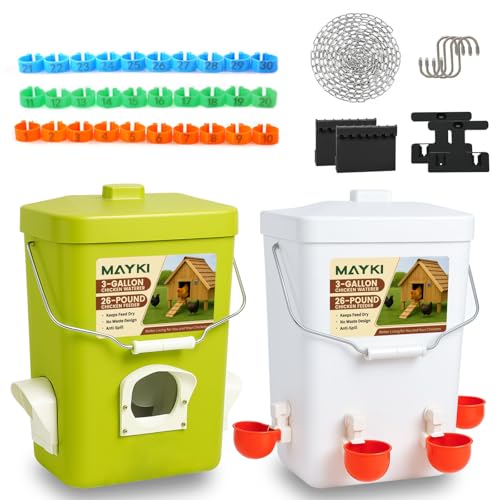
MAYKI Tgeyd No-Waste Chicken Feeder & Waterer Set
No-waste feeder plus waterer combo for up to 10 hens
How We Chose These Feeders
We did not run a feeding trial. Instead, we compared feeders on the factors that actually decide whether one is worth buying: how well the design prevents feed waste, whether it keeps rodents and wild birds out, capacity relative to flock size, durability of materials, and how easy each is to fill and clean. We read patterns across verified owner reviews to surface recurring praise and complaints, and we favored no-waste port designs and quality materials that hold up outdoors.
Feeder Types Compared
| Type | Waste | Rodent control | Best for |
|---|---|---|---|
| No-waste port | Very low | Good | Most backyard flocks |
| Large hopper | Low | Moderate | Large flocks, fewer refills |
| Treadle | Very low | Excellent | Heavy rodent pressure |
| Hanging tube/pan | Moderate | Moderate | Budget, clean feed |
| Open trough | High | Poor | Chicks, temporary use |
Our Top Pick: No-Waste Port Feeder
For most backyard flocks, a no-waste port feeder is the sweet spot. Birds put their heads into a port to eat, so they cannot scratch feed onto the ground, and the enclosed design keeps feed dry and cleaner. The Omlet model holds about 12 pounds, enough to feed six hens for roughly a week, with anti-bully ports that give lower-ranking birds a fair turn. It is easy to clean and refill, and the BPA-free build holds up outdoors. For most keepers, this style saves its cost in feed within a season.
Best for Large Flocks: The Big Hopper
If you keep a larger flock or simply want fewer refills, a large-capacity metal hopper like the 55-pound GADFISH earns its keep. Eight ports let many birds eat at once, the metal build resists weather and pests better than plastic, and the big capacity means you might fill it only every couple of weeks for a modest flock. Adjustable legs help on uneven ground. The tradeoff is size and price, but for hands-off feeding of a bigger flock, it is hard to beat.
Backyard Chicken Keepers Planner
Track your chicken's health, meds, vet visits, mobility, nutrition, and quality of life, all in one printable planner.
Best Budget Option: DIY Port Kit
The cheapest way into no-waste feeding is a DIY port kit. For a small price you get the ports and a hole saw to convert any bucket, bin, or barrel into a port feeder that holds whatever capacity your container allows. It takes a few minutes of assembly, but the result rivals a purpose-built feeder at a fraction of the cost. This is a great choice for handy keepers, large flocks on a budget, or anyone wanting to scale up cheaply.
Placement and Maintenance
Whatever feeder you choose, placement matters as much as the design. Hang or elevate it to about the height of the birds' backs to cut waste and keep feed clean, position it under cover so rain cannot spoil the feed, and secure or remove feeders at night to deter rodents. Clean feeders periodically with soap and water, dry them fully before refilling, and never leave damp or caked feed to grow mold. Good placement and upkeep make any feeder perform better and protect your flock's health.
Chicken Feeder Quick Links
- Omlet No Waste Feeder - top pick for most flocks
- 55 lb Automatic Feeder - best for large flocks
- Browse all chicken feeders on Amazon
The Bottom Line
The best chicken feeder for you depends on flock size and rodent pressure, but the principle is the same: cut waste, keep feed dry, and keep pests out. A no-waste port feeder suits most backyard flocks, a large hopper serves bigger ones with fewer refills, and a DIY port kit is the budget champion. Elevate and protect whatever you choose, keep it clean, and pair it with a good waterer. The feed you stop wasting will pay for the feeder fast.
Pet Insurance · Sponsored
Have a Dog or Cat at Home Too? Protect Them From Surprise Vet Bills
Most backyard chicken keepers share their home with a dog or cat as well, and one emergency visit can run into the hundreds or thousands. Pet insurance can help cover surprise vet bills so a sudden cost does not force a hard choice. Get a free quote and see what coverage fits your household.
Frequently Asked Questions
What type of chicken feeder wastes the least food?
No-waste port feeders waste the least, because birds put their heads into a port to eat rather than scratching at an open tray, so they cannot bill feed onto the ground. Treadle feeders, which open only when a bird steps on a platform, also cut waste and keep rodents and wild birds out. Open trough and pan feeders are the cheapest but waste the most. For most backyard flocks, a port-style or treadle feeder pays for itself in saved feed within a season.
How many feeder ports do I need for my flock?
A common guideline is one feeding port or about four inches of trough space per bird, so all hens can eat without too much competition from the pecking order. In practice, birds take turns, so you can run slightly fewer ports than birds, but more is better for harmony and to keep lower-ranking hens fed. For a flock of six, a feeder with four to six ports works well. Larger flocks benefit from multiple feeders to spread out the birds.
Should a chicken feeder be hung or sit on the ground?
Hanging or elevating a feeder to about the height of the birds' backs reduces waste, keeps feed cleaner, and discourages scratching and rodents. Feed at back height means birds eat naturally without billing feed out or fouling it with droppings and bedding. Ground-level feeders are fine for chicks and for treadle designs, but for adult flocks, getting the feeder off the ground is one of the simplest ways to save feed and keep it clean and dry.
How do I keep rodents out of chicken feed?
Rats and mice are drawn to standing feed, so the best defenses are a treadle feeder that closes when no bird is on it, removing or securing feeders at night, and storing bulk feed in metal containers with tight lids. Avoid leaving open feeders full overnight, and clean up spilled feed promptly. A no-waste port feeder also helps by keeping feed contained. Rodent control protects both your feed bill and your flock's health, since rodents spread disease.
How big a feeder capacity do I need?
Capacity is about convenience, not nutrition. A larger hopper means fewer refills, which is handy for busy keepers or those away for a day or two, while a smaller feeder keeps feed fresher and is easier to clean. As a rough guide, a laying hen eats about a quarter pound a day, so a 12-pound feeder holds roughly a week for six hens. Choose a capacity that matches your flock size and how often you want to refill, and keep feed dry.
Are automatic or treadle feeders worth it?
For many keepers, yes. Treadle feeders keep rodents and wild birds out and cut waste, which saves feed over time and protects against pests. Large automatic hopper feeders reduce refills and suit larger flocks or anyone wanting low-maintenance feeding. Both cost more upfront than a simple trough, but the savings in wasted feed and the reduction in rodent problems often justify the price within a season or two. Simpler port and trough feeders remain great budget choices.
How do I clean a chicken feeder?
Empty the feeder, brush out old feed and dust, and wash it with mild soap and water, then dry it fully before refilling, since damp feed grows mold. Clean feeders periodically, more often in wet weather or if feed has gotten damp, and remove any caked or moldy feed immediately. Metal feeders and smooth BPA-free plastic are easiest to clean. Keeping the feeder dry and clean prevents mold, which is a real health risk to chickens.
Need more help with your flock?
Browse our guides by topic to find practical solutions.
Wellness Planner: $39