What Chickens Can and Cannot Eat: Safe Food List
A clear safe-and-unsafe food list for backyard chickens: which fruits, vegetables, proteins, and scraps are safe, and the toxic foods to never feed your flock.
Chickens are enthusiastic omnivores that will try to eat almost anything, which makes a clear safe-and-unsafe list one of the handiest things a keeper can have. The good news is that most fruits, vegetables, and wholesome scraps are perfectly safe and make great treats. A short list of genuinely toxic foods is the only thing to memorize. This guide sorts it all out so you can treat your flock with confidence.
Remember the 10 percent rule throughout: treats and scraps combined should stay under a tenth of the daily diet, with complete feed making up the rest. Below are some protein and produce-based treat options to round out a safe treat rotation.
Safe Treats and Digestion Helpers
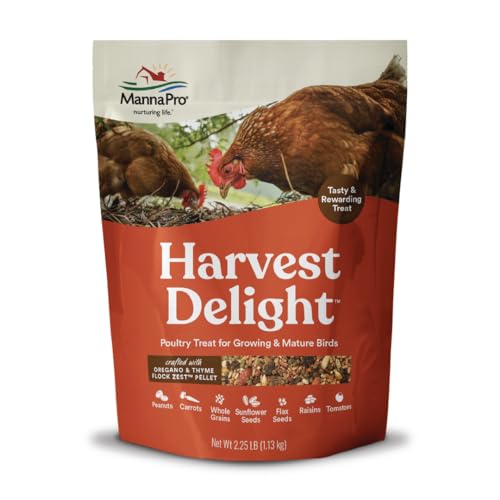
Manna Pro Harvest Delight Poultry Treat
Whole grain and seed mix with fruits and vegetables

Hatortempt Dried Mealworms, 5 lb Bag
Safe high-protein treat chickens love in moderation

Manna Pro Chicken Grit with Probiotics
Needed to digest any treats, fruits, or scraps you offer

Pecking Order Oyster Shell Calcium Supplement
Pair with crushed eggshells for laying hen calcium
Safe Foods Chickens Love
The list of safe foods is long and forgiving. Leafy greens, squash, pumpkin, cucumber, carrots, peas, corn, cooked plain rice and pasta, oats, berries, melon, apples without the seeds, and most garden produce are all welcomed. Protein treats like dried mealworms, black soldier fly larvae, and cooked eggs are excellent. Cooked, plain meat scraps are fine in small amounts. Crushed eggshells double as a calcium boost. As long as it is fresh, wholesome, and not on the toxic list, most foods are fair game.
The Toxic List: Memorize These
| Food | Why it is dangerous |
|---|---|
| Avocado (pit and skin) | Contains persin, toxic to birds |
| Raw or dried beans | Contain phytohaemagglutinin, deadly unless fully cooked |
| Green or sprouting potatoes | Solanine in green parts and skins |
| Green tomato, eggplant foliage | Solanine in unripe and green nightshade parts |
| Rhubarb leaves | Oxalic acid |
| Chocolate, caffeine | Theobromine and caffeine are toxic |
| Moldy or rotten food | Mold toxins cause illness and death |
| Onion (large amounts) | Can cause anemia |
| Very salty, sugary, greasy food | Disrupts health, especially salt |
| Alcohol | Toxic |
That table is the whole danger zone. Notice how many toxic items are the green parts of otherwise safe plants: the ripe tomato is fine, the green foliage is not; the cooked potato is fine, the green sprouting skin is not. Cooking neutralizes the bean toxin, so fully cooked beans are safe while raw or dried ones are dangerous.
The Gray Areas
A few foods sit in the middle. Citrus is not toxic, but chickens usually refuse it, so it just rots. Bread and processed carbs are not harmful in tiny amounts but are nutritionally empty, so keep them rare. Dairy is hard for chickens to digest in quantity and can cause loose droppings, though a little yogurt is generally tolerated. Raw potato peels that are not green are fine but better cooked. When a food is merely low-value rather than toxic, the question is whether it is worth a slot in the 10 percent allowance.
Backyard Chicken Keepers Planner
Track your chicken's health, meds, vet visits, mobility, nutrition, and quality of life, all in one printable planner.
Why Grit Matters for Every Treat
Whenever you feed something beyond fine crumble or pellet, your birds need grit to grind it in the gizzard. Fruits, vegetables, grains, mealworms, and scraps all require this. Free-ranging birds pick up some grit naturally, but confined flocks must have it offered free choice. Skipping grit while feeding treats is a common cause of crop and digestive trouble. Keep a dish of insoluble grit available, and use chick grit for young birds. Our grit and oyster shell guide has the details.
Recycling Eggshells Safely
Crushed eggshells are a free calcium supplement for laying hens. Rinse and dry the shells, then crush them well so they no longer look like whole eggs, which prevents teaching birds to eat their own eggs. Offer them in a separate dish or mixed with oyster shell rather than blended into feed. Eggshells are a nice supplement but less consistent than oyster shell, so use them alongside it rather than as a full replacement. It is a satisfying way to close the loop in a backyard flock.
Safe Feeding Quick Links
- Chicken Grit - needed for any treats and scraps
- Oyster Shell - pair with crushed eggshells
- Browse chicken treats on Amazon
The Bottom Line
Most foods are safe for chickens, so the easier task is memorizing the short toxic list: avocado, raw beans, green potatoes and nightshade foliage, rhubarb leaves, chocolate, large amounts of onion, very salty foods, and anything moldy. Everything else wholesome is fair game within the 10 percent treat allowance, always paired with grit. When you are unsure about a food, leave it out, and if a bird eats something genuinely toxic, watch closely and call a poultry vet if symptoms appear. For more on kitchen leftovers, see our table scraps guide.
Pet Insurance · Sponsored
Have a Dog or Cat at Home Too? Protect Them From Surprise Vet Bills
Most backyard chicken keepers share their home with a dog or cat as well, and one emergency visit can run into the hundreds or thousands. Pet insurance can help cover surprise vet bills so a sudden cost does not force a hard choice. Get a free quote and see what coverage fits your household.
Frequently Asked Questions
What foods are toxic to chickens?
The main foods to avoid are avocado pits and skin, which contain persin, dried or raw beans, which contain a toxin destroyed only by thorough cooking, green or sprouting potatoes and green tomato parts, which contain solanine, rhubarb leaves with their oxalic acid, and anything moldy or rotten. Chocolate, caffeine, and alcohol are also toxic. Large amounts of onion can cause anemia, and very salty foods are dangerous. When in doubt, leave a food out of the run.
Can chickens eat fruit and vegetable scraps?
Yes, most fruit and vegetable scraps are safe and healthy treats. Leafy greens, squash, cucumber, carrots, peas, berries, melon, apples without seeds, and cooked plain vegetables are all welcomed. Avoid the toxic exceptions: avocado, green potato and green tomato parts, rhubarb leaves, and raw dried beans. Wash produce, remove anything moldy, and keep all treats including scraps under 10 percent of the daily diet so they do not crowd out complete feed.
Can chickens eat chicken or other meat?
Chickens are omnivores and can eat small amounts of cooked meat, including cooked chicken, as a protein treat, and many keepers do offer scraps this way. Keep it small, plain, and fully cooked, avoid greasy, salty, or seasoned meat, and never feed spoiled meat. Some keepers prefer to avoid feeding chicken to chickens on principle, but there is no nutritional reason it is unsafe when cooked and fresh. Treat meat as an occasional protein snack within the 10 percent rule.
Can chickens eat eggshells?
Yes, crushed eggshells are a useful free calcium source for laying hens and a great way to recycle. Rinse, dry, and crush the shells well so they do not resemble whole eggs, which can encourage egg eating. Offer them in a separate dish or mixed with oyster shell rather than mixed into feed. Eggshells supplement calcium but should not fully replace oyster shell, which is more consistent. This is a simple, zero-cost way to support strong shells.
Are eggplant, tomato, and potato safe for chickens?
The ripe fruit of tomatoes and eggplant is safe and enjoyed, and cooked potato flesh is fine. The caution is with the green parts. Tomato and eggplant leaves and stems, green unripe tomatoes, and green or sprouting potato skins contain solanine, which is toxic. Feed only the ripe fruit and cooked, non-green potato, and skip the foliage and any green tubers. In practice, ripe garden produce is a great treat as long as you avoid the green nightshade parts.
Can chickens eat citrus?
Citrus is not toxic to chickens, and most birds simply ignore it because they dislike the taste. Small amounts will not harm a flock, so an occasional orange or lemon peel in the run is not a danger. There is an old belief that citrus interferes with calcium or laying, but the bigger reason to skip it is that birds rarely eat it, so it just sits and rots. Offer treats your flock actually enjoys instead.
What should I do if my chicken ate something toxic?
If a chicken eats something genuinely toxic like avocado, raw beans, or a large amount of onion or chocolate, remove the source, provide fresh water, and watch closely for lethargy, weakness, diarrhea, or trouble breathing. Contact a poultry or avian vet promptly if you see symptoms, since some toxins act quickly. For serious exposures do not wait. Prevention is far easier: keep toxic foods out of reach and only offer treats you know are safe.
Need more help with your flock?
Browse our guides by topic to find practical solutions.
Wellness Planner: $39